A luxury product with a long, fragile supply chain
A bottle of perfume can sell for hundreds of pounds. Much of what gives it character is grown, picked or tapped by hand, often by smallholder families in a handful of countries. Jasmine comes largely from villages in Egypt’s Nile Delta. Vanilla comes from northern Madagascar. Vetiver comes from southern Haiti. Frankincense comes from wild trees in the Horn of Africa.
Most brands never see these places. The ingredient passes through collectors, distillers and fragrance houses before it reaches a formula, and each step makes the origin harder to trace. That is where risk hides, and it is also where the most useful change can happen.
So we set out to map it. Scent Change is Aseri’s ingredient-level view of the fragrance supply chain: 40 ingredients, 13 criteria, one heat map. We built it for a client, who has given us permission to publish parts of it here for information.
ingredients have at least one High or Very high ESG rating
ingredients carry at least one Very high ESG rating
are High or above for producer poverty, the most common hotspot
Forty ingredients. Thirteen perspectives.
Explore the ratings, then select an ingredient to read the evidence behind it.
40 of 40 ingredients · Scroll across for all criteria. Codes are explained below.
| Ingredient | Industry importance | ESG risk | |||||||||||
|---|---|---|---|---|---|---|---|---|---|---|---|---|---|
| I1 | I2 | I3 | E1 | E2 | E3 | E4 | E5 | E6 | E7 | E8 | E9 | E10 | |
| High | Very high | Very high | Very high | High | Very high | Very high | Very high | Moderate | Very high | Low | High | Low | |
| High | High | Very high | Very high | High | Very high | High | Moderate | Low | Very high | Moderate | High | Very high | |
| Moderate | High | Very high | Very high | High | Very high | Very high | Very high | Moderate | High | Low | High | Low | |
| Very high | High | Very high | Very high | Very high | Very high | Very high | Moderate | Low | Moderate | Low | Very high | Moderate | |
| Very high | Very high | Very high | Very high | High | Very high | Very high | Very high | Low | Moderate | Low | High | Moderate | |
| High | High | High | Very high | High | High | Very high | Low | Moderate | Very high | Low | Moderate | Moderate | |
| High | Moderate | Very high | High | Moderate | High | High | Moderate | High | Moderate | High | High | Moderate | |
| High | Moderate | High | High | High | Very high | High | Low | Low | Very high | Low | High | High | |
| Very high | High | Very high | Very high | Very high | Very high | High | Low | Low | Low | High | High | Moderate | |
| Very high | Very high | Very high | Very high | Moderate | High | High | Low | Moderate | Very high | Moderate | High | Moderate | |
| High | Moderate | Very high | Very high | Moderate | High | Very high | Moderate | High | Moderate | Low | Moderate | Low | |
| Moderate | Low | Very high | High | Moderate | High | High | Low | Low | Low | High | Very high | Moderate | |
| Very high | Very high | Moderate | Moderate | Very high | Moderate | Moderate | Low | Moderate | Moderate | High | Moderate | High | |
| High | Moderate | High | High | Moderate | High | High | Low | Low | Moderate | High | High | Low | |
| Moderate | Moderate | Very high | High | Moderate | High | High | Low | Moderate | High | Low | Moderate | Moderate | |
| High | Moderate | High | High | Moderate | High | High | Low | Low | Low | High | Moderate | Moderate | |
| Very high | Very high | Very high | High | High | High | Moderate | Low | Low | Low | Moderate | High | Moderate | |
| High | High | Very high | High | Moderate | High | High | Low | Low | Low | High | Moderate | Moderate | |
| High | High | Very high | Very high | High | Moderate | High | Low | Low | Moderate | Low | Moderate | Low | |
| Very high | High | Very high | Moderate | High | High | Moderate | Low | Low | Low | Moderate | High | Moderate | |
| Moderate | Moderate | High | High | Moderate | High | Moderate | Low | Moderate | Moderate | Moderate | Moderate | Low | |
| Moderate | Moderate | High | Very high | Moderate | High | Moderate | Low | Low | Moderate | Low | Moderate | Low | |
| High | High | High | High | Moderate | High | Moderate | Low | Low | Low | Moderate | Moderate | Moderate | |
| Very high | High | High | Moderate | Low | Moderate | High | Low | Moderate | Very high | Low | Moderate | Low | |
| Very high | Moderate | High | Moderate | High | Moderate | Moderate | Low | Low | Low | High | Moderate | Low | |
| Moderate | High | High | Very high | Low | High | Moderate | Low | Low | Moderate | Low | Moderate | Low | |
| High | Moderate | High | High | Moderate | High | Moderate | Low | Low | Moderate | Low | Moderate | Low | |
| High | Moderate | High | Moderate | High | Moderate | Moderate | Low | Low | Low | Moderate | Moderate | Low | |
| High | Low | Very high | Low | Moderate | High | Moderate | Low | Low | Low | High | Moderate | Low | |
| Very high | Very high | High | Low | Low | Low | Moderate | Low | Low | Moderate | Very high | Low | High | |
| High | Moderate | Very high | Low | Low | Low | High | Low | Low | Low | High | Low | High | |
| Very high | Moderate | High | Moderate | Low | Moderate | Low | Low | Low | Low | Moderate | High | Moderate | |
| High | Very high | High | Moderate | Low | Moderate | Low | Low | Low | Low | Moderate | Moderate | High | |
| Very high | Moderate | High | Low | Low | Low | Moderate | Low | Low | High | Low | Moderate | Moderate | |
| High | High | High | Low | Low | Low | Moderate | Moderate | Low | Low | Moderate | Moderate | Moderate | |
| Very high | High | High | Low | Low | Low | Moderate | Low | Low | Low | High | Low | High | |
| High | High | Very high | Moderate | Low | Moderate | Low | Low | Low | Low | Low | High | Moderate | |
| Very high | Moderate | Very high | Low | Low | Low | Moderate | Low | Low | Low | High | Low | High | |
| Very high | Very high | Moderate | Low | Low | Low | Low | Low | Low | Low | Moderate | Low | Very high | |
| Very high | Very high | High | Low | Low | Low | Low | Low | Low | Low | Moderate | Low | Moderate | |
Jasmine
Florals
Egypt, India
Children found picking jasmine for suppliers to major brands (BBC 2024). The FLA programme identified 16,311 children across three monitored supply chains; an ILO living-wage study set a unified per-kilo price for 2025.
Read the criteria and indicators
- I1 Use in fine fragrance
- How widely the ingredient is used across fine fragrance formulas Evidence: Industry and trade data; fragrance composition databases.
- I2 Criticality
- How hard it is to substitute with another natural or a synthetic Evidence: Perfumery literature; availability of synthetic substitutes.
- I3 Supply concentration
- Share of supply from the top one or two producing countries Evidence: Trade and production statistics.
- E1 Smallholder, informal or wild collection
- Share produced by smallholders, informal workers or wild collectors Evidence: Sector studies; UEBT and FairWild ingredient profiles.
- E2 Child and forced labour
- Reported child or forced labour in production (incl. US DoL lists) Evidence: US DoL lists of goods; ILO; FLA; investigative journalism; country-level child labour indicators.
- E3 Producer poverty and living income
- Farmer or collector incomes below living income; price volatility Evidence: ILO living wage studies; value chain research.
- E4 Weak rule of law and corruption
- Producer countries’ rule of law and corruption scores Evidence: World Bank governance indicators; corruption indices.
- E5 Conflict and insecurity
- Production in countries or regions with armed conflict or gang violence Evidence: Conflict datasets; human rights reporting.
- E6 Indigenous peoples and land rights
- Reported land conflicts or impacts on Indigenous peoples Evidence: NGO and UN reporting; land rights research.
- E7 Biodiversity, deforestation and overharvesting
- Deforestation, CITES or IUCN listing, overharvesting of wild stocks Evidence: IUCN Red List; CITES; peer-reviewed forest loss studies.
- E8 Pesticides and hazardous chemicals
- Pesticide use in cultivation; hazardous inputs or persistent outputs in synthesis Evidence: Peer-reviewed environmental studies; regulatory restrictions.
- E9 Climate vulnerability of supply
- Exposure of growing regions to heat, drought or extreme weather Evidence: Climate hazard data; sector reporting.
- E10 GHG and energy intensity
- Energy used in distillation, synthesis or melting; fuelwood use Evidence: Industry decarbonisation reports; process studies.
What the heat map shows
The risk sits at origin, with the people. The most common hotspots are producer poverty (24 ingredients rated High or above), smallholder, informal or wild collection (23), and weak rule of law (19). Child and forced labour is rated High or above for 14 ingredients. These are the conditions in which labour abuses take root.
The naturals carry the most risk. Ylang-ylang and frankincense score highest across the ten ESG criteria, followed by myrrh, vetiver and vanilla. All five are hand-produced by smallholders or wild collectors in countries with weak governance.
Synthetics are not risk-free, but the risk is different. Aroma chemicals such as Iso E Super, Ambroxan and Hedione score lower on social issues. Their questions are about hazardous chemistry, persistence and energy use in synthesis. Perfume ethanol, made from crops such as sugar cane and grain, brings farm-level risks back in.
Most of the risk in a bottle of perfume sits upstream of the brand, with the people who grow and pick it.
What’s in the bottle
Most of what you buy is perfume alcohol. The fragrance itself, called the concentrate, is a blend of natural extracts and synthetic aroma chemicals. How much of it goes into the bottle is what separates an eau de cologne from an extrait.
A small share of the bottle. A long list of ingredients.
The formula is a trade secret. A label usually just says “parfum”. EU rules are widening what must be named: new products sold in the EU from 31 July 2026 must list any of more than 80 fragrance allergens above a set level, up from 26. Everything else in the formula stays confidential, which is one reason brands struggle to trace their ingredients.
Six steps from field to bottle
Every perfume is different, but most natural ingredients follow the same path. The further upstream you go, the more hands the ingredient has passed through and the less a brand can see.
From field to bottle.
Follow the material downstream. Compare where risk concentrates with what a brand typically sees.
Grow or gather
Tier 4 · Origin
Smallholders and wild collectors grow flowers, roots and beans, or tap trees for resin. Most work is done by hand.
Child labour · Low pay · Heat · Pesticides
- Risk
- 5 of 5, illustrative
- Brand sees
- 1 of 5, illustrative
Collect and trade
Tier 3
Village collectors, middlemen and exporters weigh and pay for flowers by the kilo, often the same morning.
Price setting · Debt · Informal trade
- Risk
- 4 of 5, illustrative
- Brand sees
- 1 of 5, illustrative
Extract
Tier 2
Distillers and processors turn raw materials into essential oils, concretes and absolutes.
Fuelwood · Energy · Worker safety
- Risk
- 3 of 5, illustrative
- Brand sees
- 2 of 5, illustrative
Compose
Tier 1
Fragrance houses blend naturals and synthetic aroma chemicals into a formula and sell the concentrate.
Traceability · Confidential formulas
- Risk
- 2 of 5, illustrative
- Brand sees
- 3 of 5, illustrative
Make
Tier 1
Manufacturers mix the concentrate with perfume alcohol, leave it to mature, then filter and fill the glass bottles.
Alcohol crops · Glass energy
- Risk
- 2 of 5, illustrative
- Brand sees
- 5 of 5, illustrative
Sell
Market
Department stores, travel retail and online shops bring the perfume, and its sourcing claims, to customers.
Claims
- Risk
- 1 of 5, illustrative
- Brand sees
- 5 of 5, illustrative
Risk rises as you move upstream. Visibility falls. The gap between the two is where due diligence has to work.
It takes a lot of flowers
Natural extracts are concentrated. A kilogram of rose oil can take four tonnes of petals, every one picked by hand. That makes these ingredients labour-intensive, and it means small changes in the price per kilo of flowers have a big effect on what pickers earn.
What goes into one kilogram of extract?
Kilograms of raw material · All bars use the same scale.
Vanilla shows the same pattern in another form. Each flower is pollinated by hand, beans are ready eight to nine months later, and it takes about six kilograms of green beans and around six months of curing to make one kilogram of finished vanilla.
A year in the fields
Many flower harvests last only a few weeks. Short, hand-picked harvests create sudden peaks in demand for labour, and in rose and jasmine those peaks are where child labour has been found.
Short seasons. Sudden demand for labour.
Harvest windows for five perfume ingredients.
| Ingredient / origin | Jan | Feb | Mar | Apr | May | Jun | Jul | Aug | Sep | Oct | Nov | Dec |
|---|---|---|---|---|---|---|---|---|---|---|---|---|
| Orange blossom Tunisia, Morocco | Outside shown harvest | Outside shown harvest | Outside shown harvest | Main harvest | Main harvest | Outside shown harvest | Outside shown harvest | Outside shown harvest | Outside shown harvest | Outside shown harvest | Outside shown harvest | Outside shown harvest |
| Rose Bulgaria | Outside shown harvest | Outside shown harvest | Outside shown harvest | Outside shown harvest | Part of the month or some years | Part of the month or some years | Outside shown harvest | Outside shown harvest | Outside shown harvest | Outside shown harvest | Outside shown harvest | Outside shown harvest |
| Jasmine Egypt | Outside shown harvest | Outside shown harvest | Outside shown harvest | Outside shown harvest | Part of the month or some years | Main harvest | Main harvest | Main harvest | Main harvest | Main harvest | Part of the month or some years | Part of the month or some years |
| Vanilla Madagascar | Outside shown harvest | Outside shown harvest | Outside shown harvest | Outside shown harvest | Outside shown harvest | Outside shown harvest | Main harvest | Outside shown harvest | Outside shown harvest | Outside shown harvest | Outside shown harvest | Outside shown harvest |
| Lavender Provence | Outside shown harvest | Outside shown harvest | Outside shown harvest | Outside shown harvest | Outside shown harvest | Outside shown harvest | Part of the month or some years | Main harvest | Outside shown harvest | Outside shown harvest | Outside shown harvest | Outside shown harvest |
Jasmine
Florals · Heart note
Jasminum grandiflorum and J. sambac
Egypt is reported to supply around half of the world’s jasmine. It is picked by hand, before dawn, by families paid by the kilo. When the price is low, children help pick.
Egypt: Gharbia · India: Tamil Nadu and Karnataka · Also Morocco, China and Grasse, France
people work in Egypt’s jasmine industry
BBC, 2024 ↗children identified across three monitored supply chains in the 2024 harvest
Fair Labor Association ↗workers given protective equipment in the programme’s first year
Fair Labor Association ↗Risk fingerprint
The ten ESG criteria, from Low to Very high.
- Smallholder, informal or wild collection
- Very high
- Child and forced labour
- Very high
- Producer poverty and living income
- Very high
- Weak rule of law and corruption
- High
- Conflict and insecurity
- Low
- Indigenous peoples and land rights
- Low
- Biodiversity, deforestation and overharvesting
- Low
- Pesticides and hazardous chemicals
- High
- Climate vulnerability of supply
- High
- GHG and energy intensity
- Moderate
From flower to bottle
- Picking
Smallholder families and seasonal workers in villages such as Shoubra Beloula pick at night and early morning, paid per kilo. Child labour, low pay and heat are central concerns.
- Collection
Flowers are weighed and sold the same morning to collectors or processors. This is a key point for price setting.
- Processing
Egyptian processors extract concrete and absolute. Examples include A. Fakhry & Co. and Hashem Brothers.
- Fragrance house
Absolute is blended into perfume formulas owned by fragrance houses, limiting brands’ visibility.
- Brand
Brands buy the finished fragrance. Their purchasing prices shape what pickers are paid.
From evidence to collective action.
- Summer 2023
BBC researchers film children picking jasmine in Gharbia for suppliers to major brands.
- May 2024
The BBC publishes its investigation. The Fair Labor Association launches Harvesting the Future with brands, six fragrance houses, Egyptian processors and the ILO.
- 2024 harvest
Monitoring identifies 16,311 children across three supply chains. Some 11,340 workers receive protective equipment and 14,289 people get medical services.
- July 2025
An ILO living wage study leads to a unified per-kilo price across processors for the 2025 harvest.
- August 2025
Heat and changing seasons are reported to be cutting Egyptian jasmine yields.
Five questions for your suppliers.
- Which country, region and processor does our jasmine come from?
- Is that supply chain covered by the Harvesting the Future programme?
- What per-kilo price reaches pickers, compared with the 2025 unified price?
- How are children’s school attendance and harvest-time childcare supported?
- Can pickers raise concerns safely, and to whom?
Each profile brings together the risk fingerprint, where the issues sit from flower to bottle, what has happened, and the questions buyers should ask.
Jasmine shows what good looks like
Jasmine is a hard story with a hopeful turn. After a 2024 BBC investigation found children picking jasmine for suppliers to major brands, brands, fragrance houses, Egyptian processors and the ILO came together in the Fair Labor Association’s Harvesting the Future programme. A 2025 ILO living wage study led to a single per-kilo price across processors.
The lesson reaches beyond jasmine. Clear evidence, a shared programme and buyers willing to act on price can move an issue in two harvests. Our profiles are built to help brands find the next jasmine before it becomes a headline.
Four more profiles
Each fingerprint shows an ingredient’s rating on the ten ESG criteria, from Low to Very high.
Vanilla
Madagascar (~80% of supply)
Vanilla from Madagascar is on the US Department of Labor child labour list. Debt-based “flower contracts”, theft and extreme price swings are reported.
- Smallholder, informal or wild collection
- Very high
- Child and forced labour
- Very high
- Producer poverty and living income
- Very high
- Weak rule of law and corruption
- Very high
- Conflict and insecurity
- Moderate
- Indigenous peoples and land rights
- Low
- Biodiversity, deforestation and overharvesting
- Moderate
- Pesticides and hazardous chemicals
- Low
- Climate vulnerability of supply
- Very high
- GHG and energy intensity
- Moderate
How we built it
Scent Change uses only public information, so the method can be repeated and checked. There are four steps.
- Choose the ingredients. We selected 40 ingredients that appear across modern fine fragrance: florals, citrus, spices and herbs, woods and roots, resins and balsams, other naturals, key synthetics, and the ethanol and glass that carry them.
- Set the criteria. Three criteria capture how important each ingredient is to the industry: use in fine fragrance, criticality and supply concentration. Ten capture its ESG risk: smallholder, informal or wild collection; child and forced labour; producer poverty and living income; weak rule of law and corruption; conflict and insecurity; indigenous peoples and land rights; biodiversity, deforestation and overharvesting; pesticides and hazardous chemicals; climate vulnerability of supply; GHG and energy intensity.
- Gather the evidence. For each ingredient we traced the main producing countries and regions, then reviewed the public record: government lists of goods made with child or forced labour, ILO and multi-stakeholder programme reports, conservation listings, peer-reviewed research and investigative journalism. In line with the principles of Aseri’s salience analysis, the ratings give most weight to issues that are serious and well evidenced. Where we found no ingredient-specific evidence on child labour, we used country-level indicators for the main producing countries.
- Rate. Each cell is rated Low, Moderate, High or Very high against the indicator for that criterion, with a summary for every ingredient. The assessment is based on desk research. Where evidence is thin, a rating reflects country-level context and marks a question to investigate, not a clean bill of health. Ratings describe the ingredient’s supply chain as a whole. They do not assess any individual company.
Why this matters for double materiality
Under the EU’s Corporate Sustainability Reporting Directive, large companies must run a double materiality assessment. It asks two questions: which of your impacts on people and the planet are material, and which sustainability matters create material financial risks or opportunities for you. For a fragrance or beauty brand, most of the answer to the first question lies in the upstream value chain.
The 2025 Omnibus changes made reporting lighter, but they did not remove this step. They also limit how much information large companies can demand from smaller suppliers. That makes good outside-in data more important, because brands need to see where the risk is without sending every supplier a questionnaire.
| ESRS standard | What it asks | How Scent Change helps |
|---|---|---|
| S2 Value chain workers | Impacts on workers in your supply chain | Child and forced labour, living income and informality ratings by ingredient |
| S3 Affected communities | Impacts on communities, including Indigenous peoples | Land rights, conflict and community evidence at origin |
| E4 Biodiversity | Impacts on species and ecosystems | Deforestation, overharvesting, IUCN and CITES status |
| E1 Climate | Emissions and climate risk | Climate vulnerability of supply and energy intensity |
| G1 Business conduct | Supplier relationships and corruption | Rule of law and corruption in producing countries |
The heat map works as the top-down layer of an assessment: a reasoned, sourced view of where impacts are most likely and most severe. It tells a brand which ingredients and origins to take into the bottom-up work, such as supplier engagement, audits and conversations with workers. The same evidence supports human rights due diligence under the EU’s due diligence directive and preparation for the EU Forced Labour Regulation.
It also points to opportunity. Where risk is concentrated, a brand that invests in traceability, fair prices and community programmes can create real positive impact and a stronger, more secure supply.
Who holds the power
At the top of the chain, the market is concentrated. Four fragrance houses supply a large share of the world’s fragrances, which gives them real influence over how ingredients are sourced and priced.
~60%
Four houses. A large share of the market.
Givaudan, dsm-firmenich, IFF and Symrise supply around 60% of the fragrance market.
That concentration cuts both ways. It makes the fragrance houses a bottleneck for information, because they hold the formulas. It also means a handful of companies can move a whole ingredient. In Egypt, six fragrance houses joined brands, processors and the ILO in one programme on jasmine.
What this means for brands
A brand cannot see its whole supply chain on its own, but it can decide where to look first. We suggest five steps.
- Know your ingredients. Ask your fragrance houses which natural materials are in your top formulas, and in what volume.
- Map them to origin. Trace priority naturals to country, region and processor. The Scent Change heat map shows which to start with.
- Look at price. Low and volatile prices at the farm gate drive most labour risk. Check what reaches pickers, not just what you pay.
- Verify on the ground. Use audits and worker voice at collection and processing sites, where the risk is highest and visibility lowest.
- Act together. Join or support collective programmes for the ingredients that matter most, and report on progress honestly.
How Aseri can help
Scent Change is one example of how we work: start with the evidence, focus on what matters most, then go and check on the ground.
Risk intelligence
Ingredient and commodity heat maps, country risk briefings and ingredient profiles, built from our risk universe and kept up to date as new evidence emerges.
For fragrance and beauty brands, we connect ingredient-level ESG risk with the countries and regions producing those materials. This helps responsible sourcing teams prioritise traceability, supplier engagement and deeper research. Our analysts can investigate specific questions, supported by data available through the Aseri platform.
Audit
Social and environmental audits at farm, collector and processor level, with worker voice, to test what the heat map flags and verify improvement.
We look beyond written policies to working conditions, recruitment, pay and the experiences of the people doing the work. Audits help brands examine the human rights and environmental concerns identified in their fragrance supply chains, distinguish evidence from assumptions, and assess whether corrective actions are making a difference.
Consultancy
Double materiality assessments, human rights due diligence, responsible sourcing strategy and supplier programmes that turn hotspots into action.
We help teams apply the research to their own ingredients, sourcing relationships and business priorities. That can mean shaping a double materiality assessment, setting priorities for supplier due diligence, or designing a practical responsible sourcing programme with clear responsibilities and a way to track progress.
About our evidence
Scent Change draws on the principles of Aseri’s salience analysis, which we use across commodities to identify risks, analyse their drivers and manage exposure.
Identify the risks. Analyse the drivers. Manage the exposure.
Scent Change sources
The heat map and ingredient profiles link to their supporting evidence. Sources for the supply-chain figures:
- Concentrate levels: Eau de toilette, Wikipedia
- EU allergen labelling: COSlaw.eu; SGS
- Rose: Preferred by Nature; Rose Festival Kazanlak
- Orange blossom: Première Peau
- Jasmine: Perfumer & Flavorist; Fair Labor Association
- Lavender: Wikifarmer; Routes de la Lavande
- Vanilla: Symrise; Livelihoods Funds; Ecofin; Monchy
- Market concentration and competition inquiries: BeautyMatter; Cosmetics Business; Personal Care Magazine
© Aseri 2026 · Scent Change (September 2026). Produced for a client and published with their permission, for information only. Ratings are based on publicly available information and do not assess any individual company.
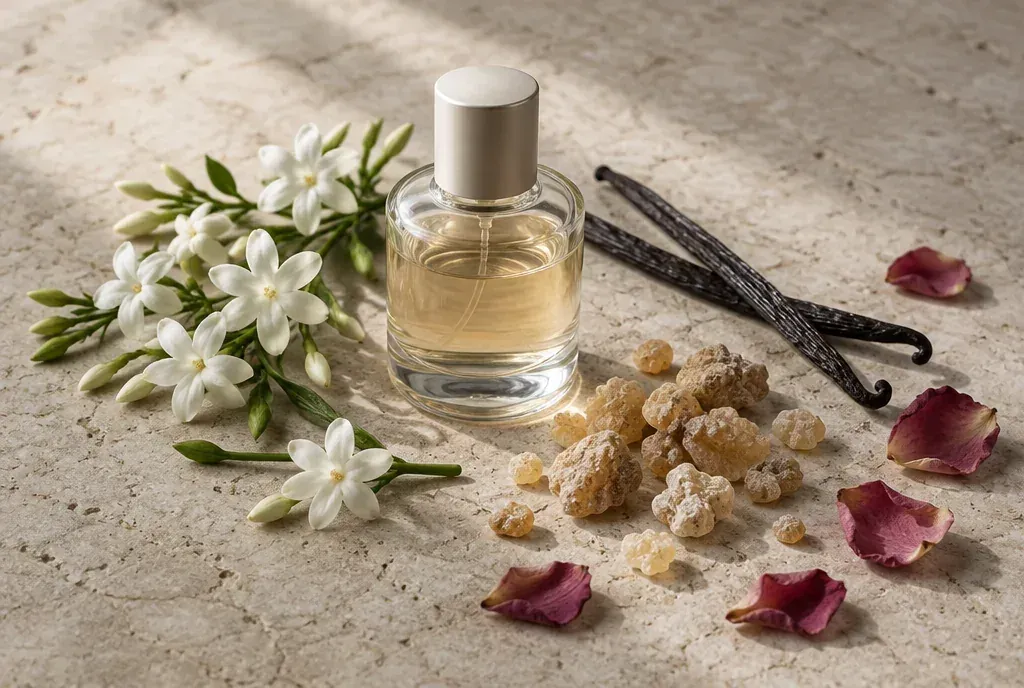
Header image: AI-generated illustrative still life, created with Higgsfield.